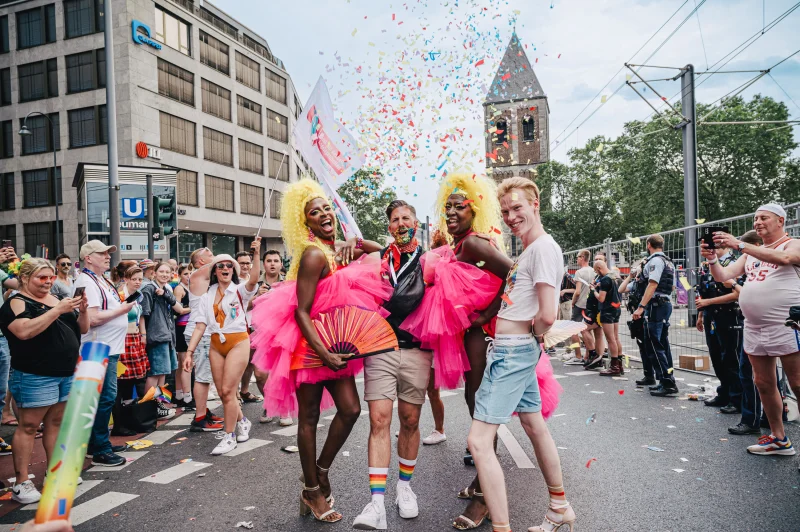
The event drew an estimated 60,000 participants in the parade itself, each with their own reason for marching. For Martin, a 35-year-old from Giessen also known as "Flirty Flamingo," Pride is a way of life. He plans to attend 20 parades this summer alone. "The flamingo is my symbolic animal," he explained, referencing a community joke that while the stork brings straight children, the flamingo brings the queer ones. "I'm one of the pink children," he said.
Martin's story highlights the stark contrast between personal acceptance and public hostility. His coming out to his parents was met with love and a simple request from his father: "If you ever find a man, please introduce him at home. Before I die, I want to know you're happy."
Yet, daily life is different. Dressed in his usual rainbow attire, Martin faces regular harassment. "Cars stop, people shout things. Swear words. Gestures. I get spat on," he recounted. "There have even been situations where I thought it wouldn't stop at words. They manage to intimidate me."
A Widening Concern Across the Spectrum
This feeling of unease is widespread. Martin worries that the gains made by the community, such as marriage equality and the new Self-Determination Act for trans individuals, could be reversed by a shifting political climate, fueled by far-right rhetoric. "A climate is currently being created that calls it into question again," he noted.
His concern was echoed by many, including some unexpected figures. Herbert Reul, the 73-year-old conservative Interior Minister of North Rhine-Westphalia from the CDU party, attended Pride for the first time. His presence was a statement in itself. "I'm here because I'm increasingly worried," Reul told the German Press Agency. "We have a growing number of people who claim the right to dictate how we should live. And that's a mistake."
The political tension was visible throughout the parade, with signs like "Lesbians Against Merz" targeting Friedrich Merz, the leader of Reul's own CDU party, for his socially conservative stances.
Generations of Resistance
For older generations, the current climate is a worrying echo of a different kind of struggle. Ralf, 64, from Dortmund, recalled a time when queer life was forced to be invisible. "Everything was more hidden back then. Behind closed doors, in dark corners," he said. He finds hope in the younger generation's visibility. "More and more young people are joining now... everyone has to take to the streets and show what's going on. Show that we're here."
That fight is also being waged in the legal arena. Shanann, a 36-year-old lawyer specializing in trans rights, warned that progress is fragile. Citing developments in the United States, she stressed the need for vigilance. "We don't need another Trump in Germany," she said.
This resistance is becoming more localized. Observers noted that Pride parades are now emerging in smaller towns across Germany, particularly in regions with strong support for the far-right AfD party. It's a sign that opposition is mobilizing resistance at a grassroots level.
For Martin, "Flirty Flamingo," this network is more than just a political movement. It's a lifeline. "I don't have children," he said. "For me, this is my circle of friends." He paused, then added, "It's become a substitute for family."
Based on reporting by queer.de